Bryan ThomasJune 3, 2025Chickens, Household TipsNo Comments on Ultimate Guide to Predator-Proofing Your Chicken Coop
Raising backyard chickens is deeply rewarding, but it also comes with its fair share of challenges—chief among them: predators. Losing part of your flock to a surprise attack can be heartbreaking, and it’s a stark reminder that we share our environment with cunning and hungry animals. Whether you’re just starting your flock or have years of experience, reinforcing your defenses is critical. This comprehensive guide offers the best strategies to predator-proof your coop and give your chickens the protection they deserve.
Understanding what you’re up against is the first step. Predators vary by region:
Learn to identify tracks, listen for nighttime sounds, and talk to local farmers. Knowing which animals are a threat will allow you to tailor your defenses—what works for raccoons won’t necessarily work for owls.
🧠 Tip: Install a trail camera near your coop to identify nocturnal visitors.
Chicken wire is deceiving—it keeps chickens in, but doesn’t keep predators out. Its soft wire and wide holes allow raccoons to reach through and snatch hens or permit larger animals to tear through.
Use instead:
Seal all coop vents, windows, and lower sections with hardware cloth. It’s a small investment that pays off in long-term protection.
A clean yard is your first line of defense. Spilled feed, food scraps, and open garbage draw scavengers like raccoons, opossums, and even bears.
Clean Coop Checklist:
Even fruit trees near your coop can attract unwanted guests. Consider fencing off or netting nearby fruit-bearing plants.
Many predators are nocturnal, and a sleeping chicken is a sitting duck. Locking your chickens into their coop at dusk can prevent surprise attacks.
Why it’s essential:
Install an automatic coop door if you struggle to keep a consistent routine. These can be set by light or time, offering peace of mind when you’re busy.
Electric poultry netting is a game-changer for those raising chickens outdoors. It creates a psychological and physical barrier for ground predators.
Benefits:
Use it as a perimeter around your coop and chicken run. Even persistent predators like raccoons will avoid the shock after a few encounters.
A predator only needs a small opening to wreak havoc. Mink can enter a hole as small as 1 inch and kill for sport.
What to look for:
Use caulk, wood panels, or metal flashing to secure these vulnerabilities. Make a habit of checking your coop weekly.
Free-range birds are especially vulnerable. If predators are active during the day or you’re away from home often, a well-built chicken run is essential.
Design tips:
Rotating chickens between multiple secure runs also reduces overgrazing and breaks predator habits.
Now retrieving an image set.
Digging predators like foxes and coyotes can easily slip under perimeter fencing.
How to secure it:
This strategy physically prevents predators from tunneling into your run.
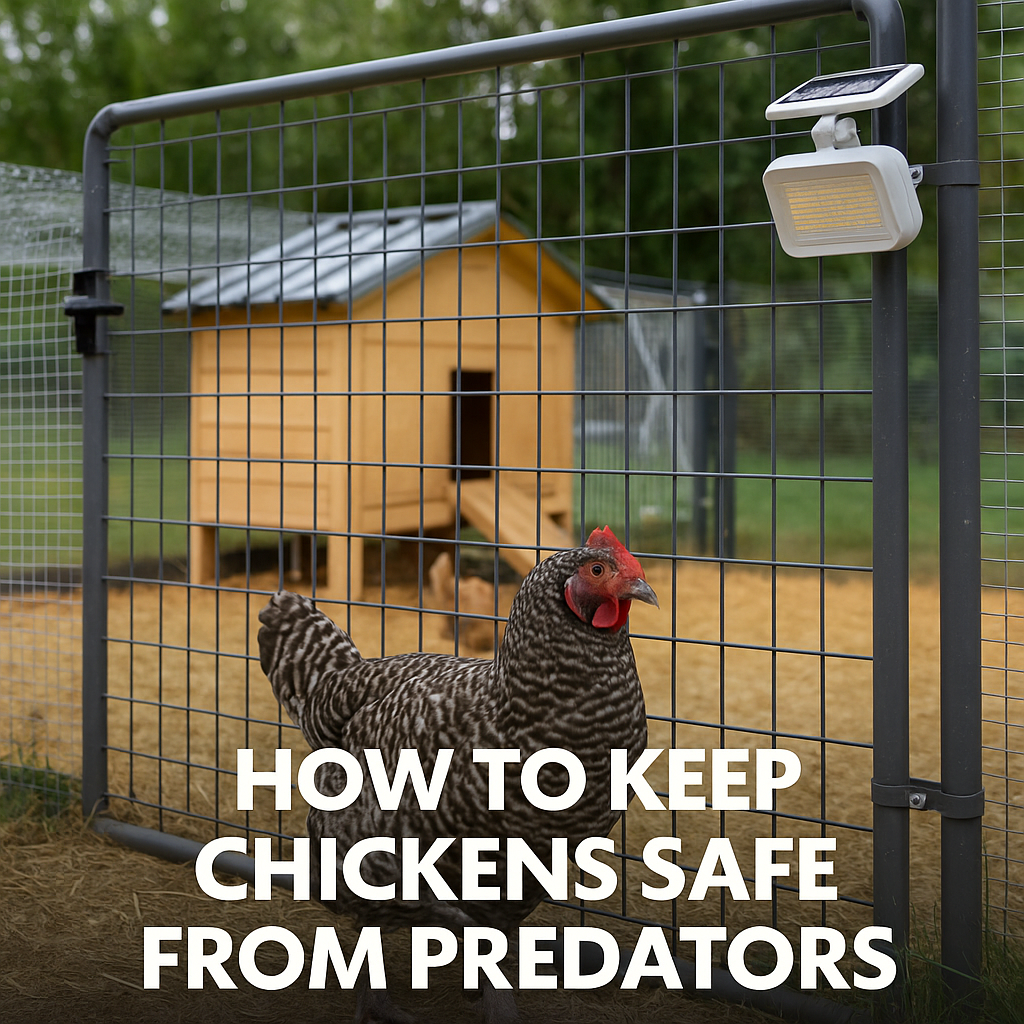
Predators hate surprises. Motion-activated lights can scare off nocturnal threats and alert you to unexpected visitors.
Install lights:
Look for lights with adjustable sensitivity and brightness to fine-tune their effectiveness.
If your coop has no roof, hawks and owls pose a serious danger. Netting creates a protective canopy.
Alternatives:
The goal is to confuse birds of prey with movement or barriers they won’t risk navigating.
Animals can be your allies. Some are loud, others aggressive—but all offer protection.
Guardian Animal Pros Cons Rooster Alerts & defends flock May be aggressive toward people Goose Alarm system, stays with flock Loud, may chase kids Donkey Deterrent to coyotes Needs pasture space LGD (dog) Most effective for large flocks Needs training, food, care
Choose an animal that suits your homestead size, environment, and noise tolerance.
Predators love cover. Clear a 5–10 ft. perimeter around your coop of high grass, woodpiles, or brush.
Why it works:
A visible, open space is a psychological barrier to stealthy predators.
If you allow free-ranging, make sure chickens have places to dash for cover.
Ideas:
These offer quick escape routes in case of an aerial attack and may save lives.
Let your flock free-range just before dusk, when you’re around and they naturally head toward the coop.
Advantages:
Supervised ranging gives your birds stimulation and variety while keeping danger at bay.
Owls and scarecrows are only effective if they’re unpredictable.

Now retrieving an image set.
Effective deterrents:
Change locations weekly to keep predators on their toes.
Your scent and movements can signal danger to predators. Spend time near the coop each day.
Even short activities help:
Consistency builds a human “territory” around your birds.
Some swear by predator urine sprays or granules to keep other predators at bay. The theory is based on territorial behavior.
Notes:
It’s an added layer of defense, though not a guarantee.
Loose feed invites rodents, and where there are rodents, there will be predators.
Prevent this by:
A clean coop is not just healthy—it’s secure.
Want to know what you’re really dealing with? Install a game camera and monitor coop activity.
Why it’s useful:
Bonus: It’s also entertaining (and a little terrifying) to see who’s been lurking around.
An automatic door ensures your birds are safely locked in, even if you’re late or forgetful.
Benefits:
It’s one of the best investments you can make in poultry security.
Predator-proofing isn’t about doing one thing—it’s about building a layered defense. With the right tools, habits, and observations, you can create a fortress your chickens will thrive in.
“Expect the unexpected—and then secure against it.”
Whether you’re dealing with sneaky raccoons or swooping hawks, this guide will help you stay one step ahead.
Ultimate Guide to Predator-Proofing Your Chicken Coop
Source: Original Article